
Vision
The future of digital systems must not be defined by efficiency alone. It must be defined by whether systems reduce total environmental burden, respect planetary boundaries, and distribute benefits fairly across society.
In CTTC , we would like to set out a practical and standardized framework for designing, operating, and evaluating digital systems so that efficiency gains are not confused with sustainability, and innovation is not detached from planetary and societal realities.
Our vision calls for a shift from isolated technical optimization to systemic sustainability assessment. Designing sustainable digital systems means accounting for infrastructure, life cycle, environmental feedback, and social justice as inseparable dimensions of the same responsibility.
Infrastructure Must Be Seen as a Whole
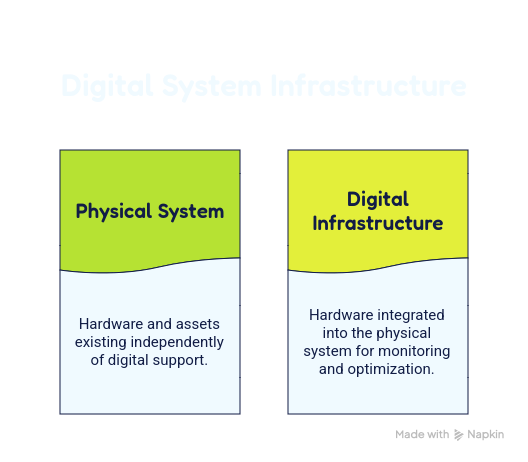
Digital systems rely on both physical and digital infrastructure. Sustainability claims are incomplete unless they account for the energy and material footprint of the full system.
On one side, the physical system being optimized must be included in the assessment. This includes all hardware and assets that exist independently of the digital support layer. For example, in transportation, this means vehicles, lights, roads, and related physical assets.
On the other side, the digital infrastructure must also be counted, including all hardware that is integrated into the physical system for monitoring, coordination, prediction, and optimization. In transportation, this includes sensors, cell sites, optical cables, edge computing servers, and connected network equipment.
A digital system is not sustainable merely because its control algorithm is efficient. It is only sustainable when the combined burden of physical and digital infrastructure is explicitly recognized and responsibly managed.
Full Life-Cycle Assessment Is Non-Negotiable
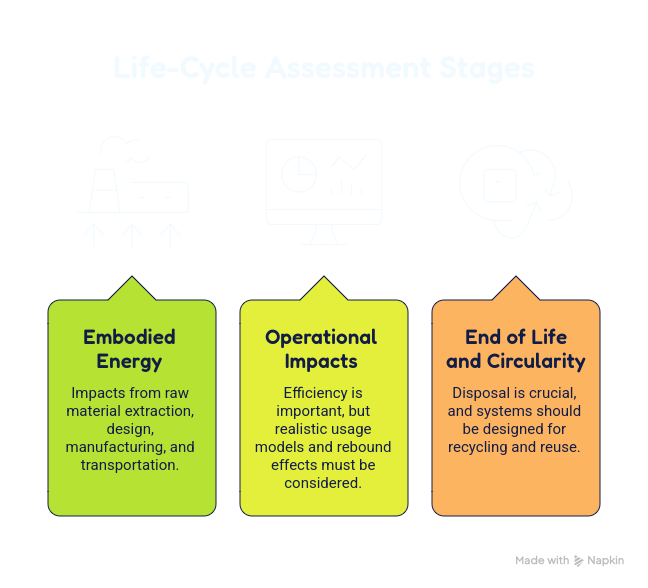
Sustainability must be evaluated across the full life cycle of the digital system: from manufacturing to operation and, eventually, disposal or reintegration into circular value chains.
Embodied Energy
Embodied impacts must be considered from the beginning, including extraction of raw materials, design, manufacturing, and transportation. These stages are often difficult to quantify, as they require multi-disciplinary skills, and often vendors do not transparently provide information. Therefore, literature-based models and life-cycle assessment methods can be used where measurement is not possible.
Operational Impacts
Operational efficiency remains essential, but it cannot be treated as the whole story. Moreover, system evaluation must include realistic usage models rather than idealized or artificially constrained assumptions. Rebound effects must be treated during the design, considering realistic consumption models. Sustainable design requires either explicit rebound analysis or design choices that reduce the likelihood of rebound-driven overconsumption, fostering technology sufficiency.
At minimum, assessments should compare multiple scenarios, including:
- Rebound-aware operation, where efficiency gains may trigger additional demand or offset expected savings.
- Environmentally aware operation, with sufficiency incentives and constrained carbon emissions.
End of Life and Circularity
Considering the penetration and the average replacement of digital technologies, disposal is a crucial part of sustainability. Systems’ design must account for recycling, waste management, refurbishment, component reuse, and circular design principles wherever possible.
Where direct end-of-life data is unavailable, literature models can provide baseline estimates. Even so, circular design should be preferred over linear design to reduce dependency on extraction and to lower long-term environmental footprints.
The Planet Is the Final Feedback Loop
Planetary sustainability indicators cannot be considered optional externalities. They are the ground truth against which sustainable actions and solutions must be judged.
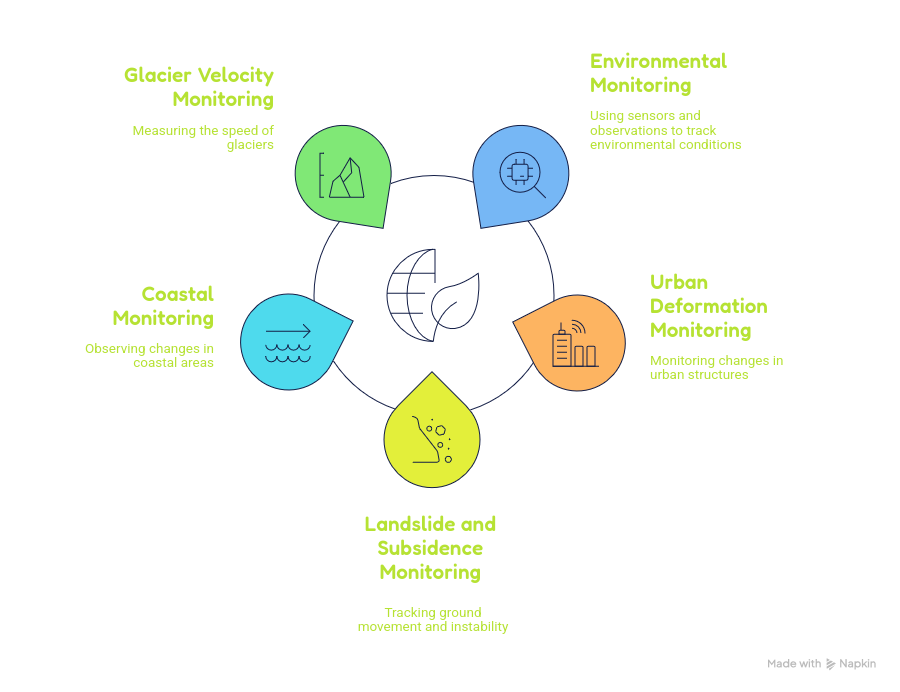
Digital systems should therefore integrate environmental feedback into both design and evaluation. This includes monitoring climate-related and adaptation-related phenomena through sensing, remote observation, and data-driven interpretation.
Relevant indicators include:
- Environmental monitoring through chemical sensing, physical sensing, electromagnetic observations, wireless sensor networks, and related instrumentation.
- Urban deformation monitoring.
- Landslide and subsidence monitoring.
- Coastal monitoring.
- Glacier velocity monitoring.
These indicators provide direct evidence of whether systems and policies are aligned with ecological resilience. Ultimately, if a system is efficient in operational metrics but contributes to deteriorating environmental conditions, it cannot be considered sustainable.
Societal Impact Must Be Measured, Not Assumed
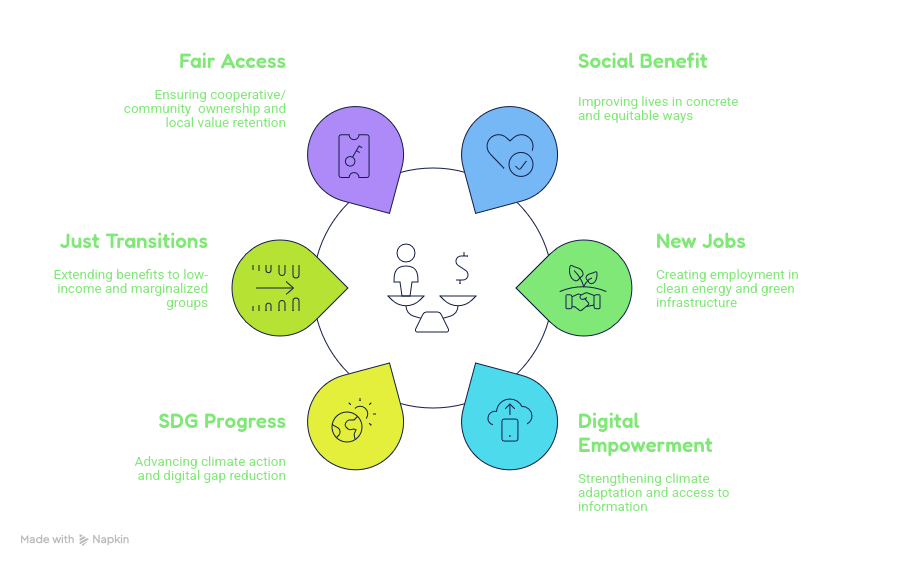
A sustainable system must improve people's lives in concrete and equitable ways. Social benefit cannot be treated as an automatic by-product of technical innovation.
Assessment of societal impact should include:
- New jobs and local economies, especially where clean energy, green infrastructure, and circular-economy solutions create employment in installation, maintenance, manufacturing, and services.
- Empowerment through digital tools, where ICT, AI, and data platforms strengthen climate adaptation, disaster preparedness, access to information, and participatory decision-making.
- Progress on the Sustainable Development Goals, especially climate action, clean energy, poverty reduction, and gender equality when technology is paired with inclusive policy and social entrepreneurship.
- Just digital transitions, where benefits are intentionally extended to low-income and marginalized groups rather than captured only by those already advantaged.
- Fair access to technologies and technology sovereignty, including cooperative ownership, community models, local value retention, and protection against disproportionate environmental or social harm.
Sustainability without social justice is incomplete. A system that reduces emissions while deepening inequality, dependency, or exclusion fails the broader test of responsible and fair innovation.