
The Interdisciplinary Sensors and Microwave Devices (ISMD) Laboratory
Preserving vulnerable ecosystems requires more than high quality maps and biomass models. It also requires the ability to monitor physicochemical environmental parameters in real-time. Sensor networks are essential for detecting invisible threats (toxic chemicals, such as Hydrogen leaks or volatile organic compounds), which can compromise both environmental change and human health.
The Interdisciplinary Sensors and Microwave Devices (ISMD) Laboratory at CTTC specializes in sensors and microwave devices spanning the whole spectrum, from direct current to visible light. By leveraging cutting edge technologies such as micro/nanofabrication, 3D and inkjet printing, laser machining, MEMS, superconductivity, and LTCC. Our lab develops tailored solutions for integrated sensing and communications applications.
Here summarized, the ISMD lab produces sensors for liquids, solids, and gases detection, as well as wireless communication components for 6G systems, enabling robust and distributed monitoring systems with integrated sensing and communications capabilities. Integrated sensing and communication (ISAC) systems make it possible to move towards an integrated monitoring distributed network, where environmental risks are mapped and identified, allowing anticipation, risk mitigation and planning in real time.
Hydrogen Detection
Green hydrogen plays a key role in the energy transition, while fossil fuels are being depleted, but its safe deployment and storage depend on high-performance leak detection. Within this context, the ISMD Lab at CTTC and partner URV have developed a compact, standalone low-cost hydrogen gas sensor prototype. The prototype attracted interest in the field of space exploration.
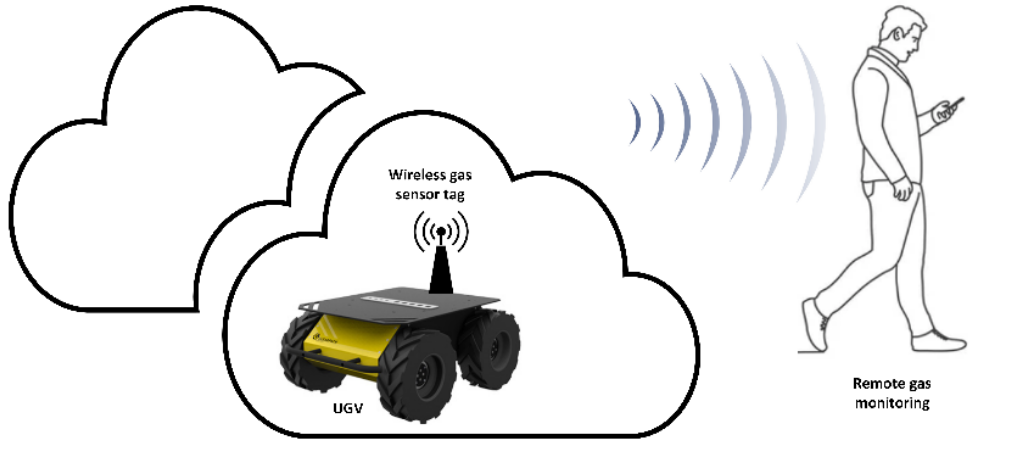 Architecture of the wireless hydrogen gas sensing system.
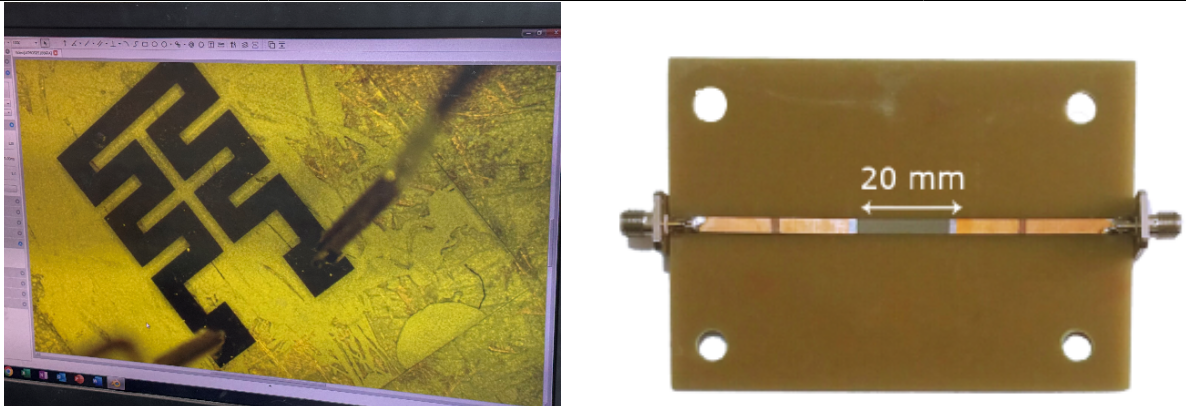 Micromachined microwave chips and low-cost circuit for hydrogen detection
Micromachined microwave chips and low-cost circuit for hydrogen detection
Volatile organic compounds (VOCs) are a class of chemicals that evaporate at ambient temperatures (vapor pressure ≥ 0.01 kPa at 20°C). Human exposure to VOCs can occur through inhalation, ingestion, and dermal contact, which may result in significant health issues due to their toxicity, carcinogenicity, and teratogenicity. Furthermore, these compounds represent a potential threat to environmental stability. In this regard, the ISMD Lab explores miniaturized sensing heads that can be integrated into future 6G ICAS applications. These sensors nodes could detect the presence of hazardous organic vapors and relay measurements in real-time, providing early warnings in both industrial and warehouse scenarios.
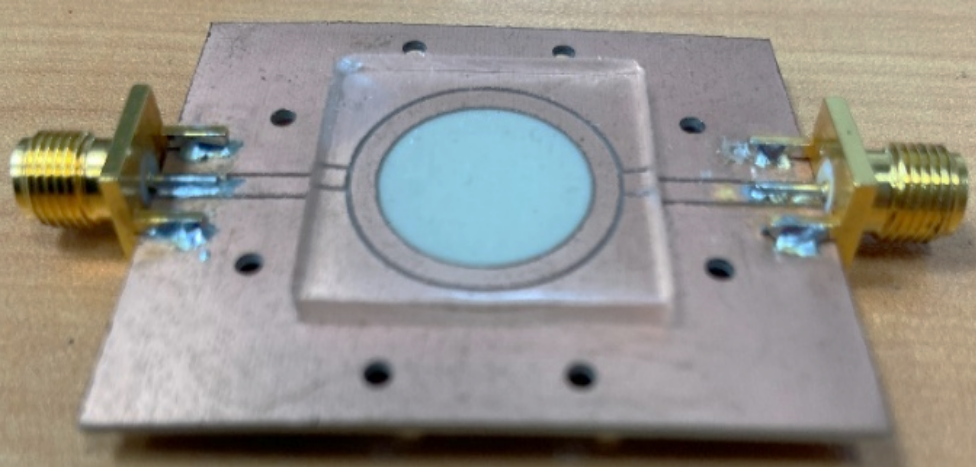 Microstrip ring resonator coated with PDMS for VOC detection
Toxic chemical compound detection
The ISMD laboratory develops both microwave and optical-based sensing (in both visible and NIR light) sensing. In the SensorQ project, the CTTC team developed a high-sensitivity wireless sensor network for toxic chemical compound detection, using micro/nanofabricated optical sensor heads; the sensor heads are integrated with communication electronics and antennas to form standalone wireless nodes for remote monitoring of contaminated areas. Parallel efforts exploit microwave circuits and compact infrared sensors to identify the spectral and dielectric signatures of toxic chemical compounds, facilitating the development of portable, low-power consumption devices for first responders and security applications.
This work has been developed in the framework of the projects Agent TAG, AGENTSENSOR, SensorQ.
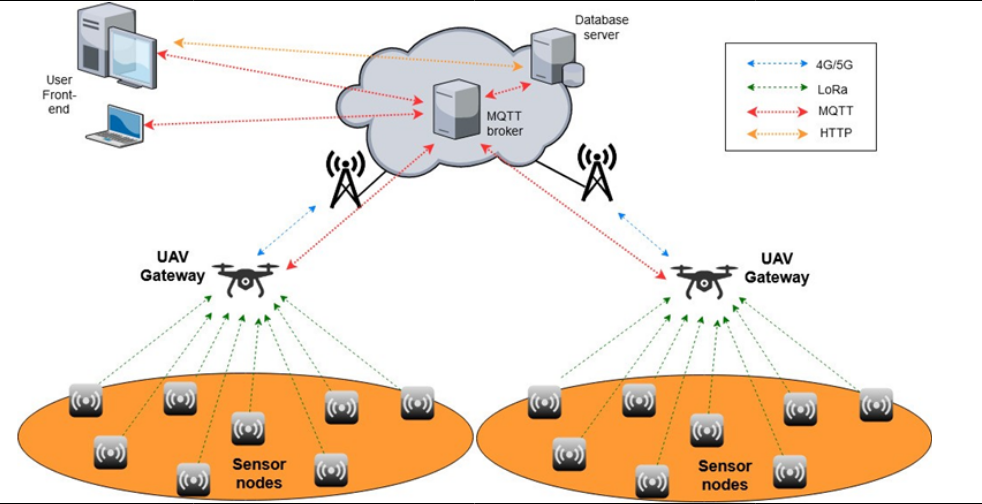 Architecture of the SensorQ System
 Micromachined SPR chips for chemical vapor detection.
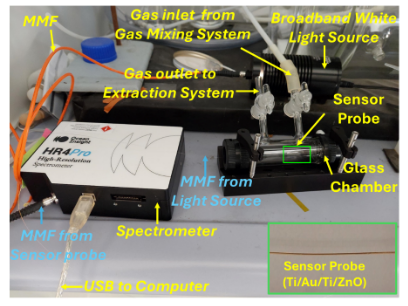 Characterization of the sensor probe in a controlled laboratory environment.
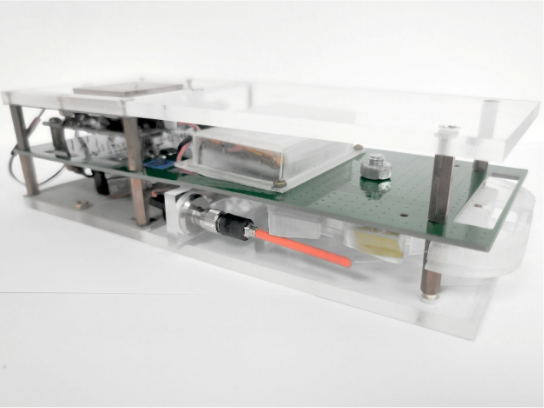 Photograph of the wireless sensor node prototype.
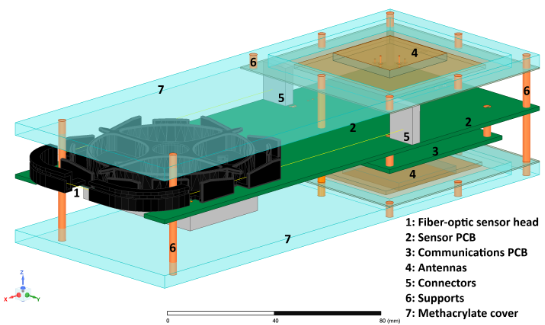 Wireless sensor node 3D model and parts.
Physical parameter detection using low-cost microwave sensors
Microwave signals used for wireless communications are used to detect physical parameters such as the dielectric permittivity of materials, allowing designs to discriminate between different materials and temperature using low-cost designs. The sensor implementations use either surface plasmon waves or confined electromagnetic fields for detection.
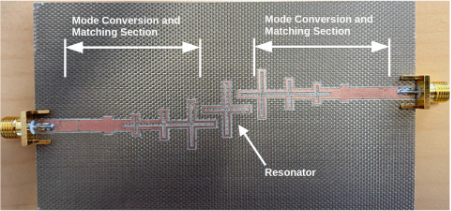 Planar low-cost sensor for dielectric material identification.
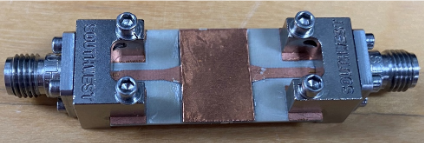 SIW resonator temperature sensor with embedded PDMS active layer inside the cavity